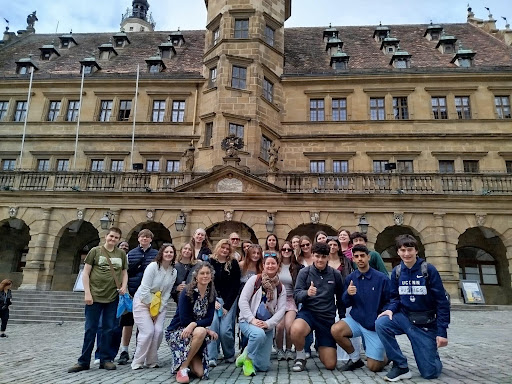
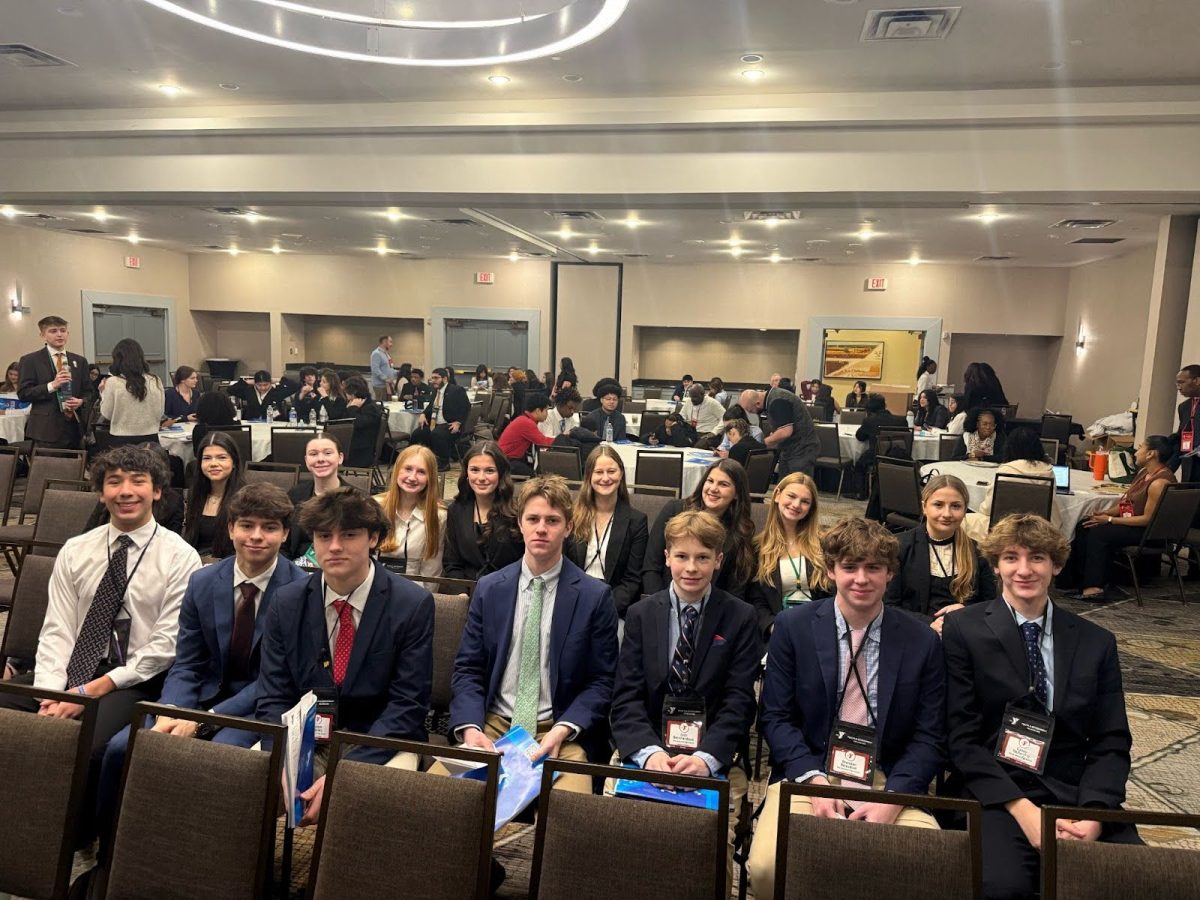
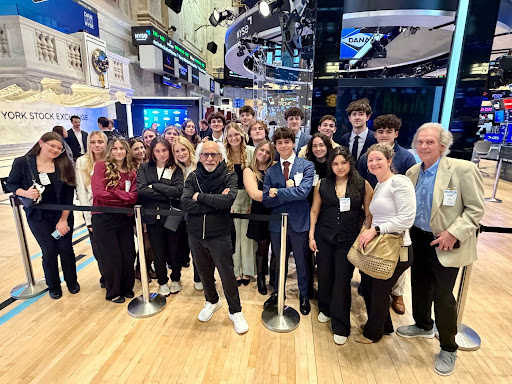

The undeniable highlight of our DECA trip to New York City was our visit to the New York Stock Exchange, one of the most storied institutions in American financial history. The NYSE was officially founded in 1792, when 24 brokers and merchants gathered under a buttonwood tree to sign what became known as the Buttonwood Agreement, a handshake deal that laid the groundwork for the largest stock exchange in the world. Standing on that trading floor, it was impossible not to feel the weight of that history all around us. Every trading day at 9:30 AM and 4:00 PM, the sound of the bell echoes across the floor, officially signaling the start and end of equity trading, and we were lucky enough to witness the closing bell ceremony live. Junior Annalise Sarette, a member of DECA, said “The bells were too loud but I had a lot of fun learning about the history of the New York Stock Exchange.” According to the Wall Street Journal, bells were first used at the Exchange in the 1870s, with a Chinese gong serving as the original bell of choice, but in 1903, when the Exchange moved to its current building, the gong was replaced by an electrically operated brass bell large enough to resonate throughout the entire trading floor. As 4 PM approached, the energy on the floor was electric. We watched live reporters broadcasting from their designated area right there on the trading floor, cameras rolling as the final seconds of the trading day ticked down. Then the bell rang, loud, iconic, and unlike anything any of us had ever experienced in person.
Just when we thought the day couldn’t get any more memorable, Peter Tuchman made his way over to us. If you’ve ever seen a dramatic market photo on the front page of a newspaper or splashed across a news website, there’s a good chance Tuchman was in it. Known as the “Einstein of Wall Street” for his distinctive hairstyle, he has been called the most photographed trader on Wall Street, typically featured in reaction shots during particularly volatile trading days. According to Tuchman’s personal accounts, he started as a teletypist on the NYSE floor on May 23, 1985, working his way up to become a broker by 1988, and over four decades he has weathered Black Monday in 1987, the dot-com bubble burst, the 2008 financial crisis, and the COVID-19 pandemic. His path to Wall Street was anything but a straight line too. Before his career in finance, he sold records and even worked in Africa for a Norwegian oil company before coming back to New York and landing a job as a clerk on the NYSE floor. Meeting someone with that kind of story, right there on the trading floor where it all happened, honestly felt surreal. He was warm, funny, and genuinely excited to talk with us, the kind of person who makes you feel like finance isn’t some far-off, intimidating world, but something real and actually within reach.
The experience didn’t stop when we left Wall Street. Peter Tuchman generously agreed to do a Zoom call with our class, giving us the chance to ask everything we didn’t get to during the visit. Tuchman has described the NYSE as home, saying “I knew immediately it was my calling”, and that he thrives on volatility, market action, headlines, and news. That passion came through in every word he shared with us, both on the floor and on the call. Outside of trading, he co-founded the Wall Street Global Trading Academy, a platform built to mentor young traders through live Q&A sessions, masterclasses, and hands-on guidance. Old Saybrook High School junior Dillon Blewitt said, “Meeting Mr. Tuchman was such a cool opportunity. It was really awesome being able to meet someone with so much history and experience. I am going to remember this moment for the rest of my life.” For a group of high schoolers still figuring things out, a day at the NYSE and a conversation with someone like Peter Tuchman was more than just a field trip. It was a reminder that the world of finance is built by real people, with real stories, who all started somewhere just like us.