










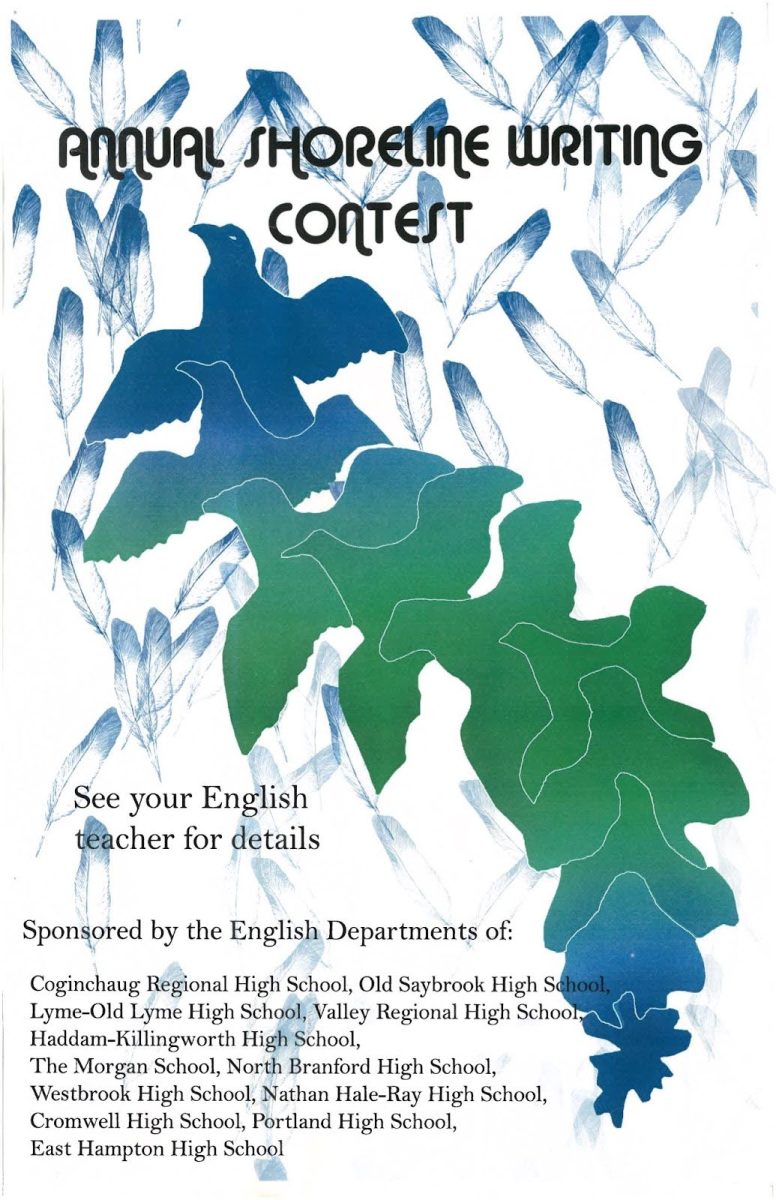
The Shoreline Heads of English Department writing contest (commonly shortened to S.H.E.D), is quickly approaching this February. Many high school students are either required or choose to submit a piece in the categories offered: short story, analysis, poetry, humor, journalism and personal narrative. The pieces that are submitted then go into preliminary judging by the English teachers at Old Saybrook High School. After that, the top pieces get sent to the judges at the writing contest, where they compete against entries from other Shoreline schools to be a top three in each category. The work that the students do doesn’t just strengthen their abilities as writers, but it enhances their creativity outside of the classroom and gives them an opportunity to further their academic and artistic potential.
OSHS students, along with students from across the shoreline, have been working on their submissions for approximately two months now, either creating a new piece or improving their previous work. They have been actively using a creative process outside of classroom time to complete their writing. The requirement to submit a piece not only challenges the students who would have opted out, but it also shows students the ways that one can participate in activities like this outside of the school. a 2026 S.H.E.D judge and previous judge for various writing contests, Ms. Amy Elliot talked about her experiences being a judge for these types of competitions. Many wonder how the contest enhances creativity to the participants. Elliot said, “I would think that knowing that the competition exists likely pushes students to tackle topics they wouldn’t normally cover in the context of a classroom assignment, where the prompts are generated by the teacher and maybe don’t stem from the student’s own ideas.” She later also added that the students often will perform differently, knowing that their work is becoming competitive, which would push them to do their best academically and creatively.
Ms. Elliot also described the idea that when writing for different authentic audiences, such as S.H.E.D, or in a bigger picture and publication like The New York Times, it makes the writer adapt to changing their perspective per viewer. She states, “as students, the applicants are still developing their writing styles, and clearly S.H.E.D offers the freedom to explore that.” This exhibits yet another way to enhance one’s creativity through this contest, and not only strengthen one’s writing style but give them a preview into what it would be like to fulfill writing as a career.
When they submit a piece to S.H.E.D, not only are students fulfilling a credit most likely given by the teacher, but they are improving their creative writing skills on something outside of classwork, and could even get recognition for their work if they win. As Ms. Ellitot said, “it’s a pleasure to see what the next wave of talent brings to the table.”